
Every pallet.Every level.Every dollar.
Field Connect tracks facade and joinery packages from the packing list to the site, by container, stillage and level, and applies your rate card as each movement is recorded. The costing report is written by the work, not rebuilt at month end.
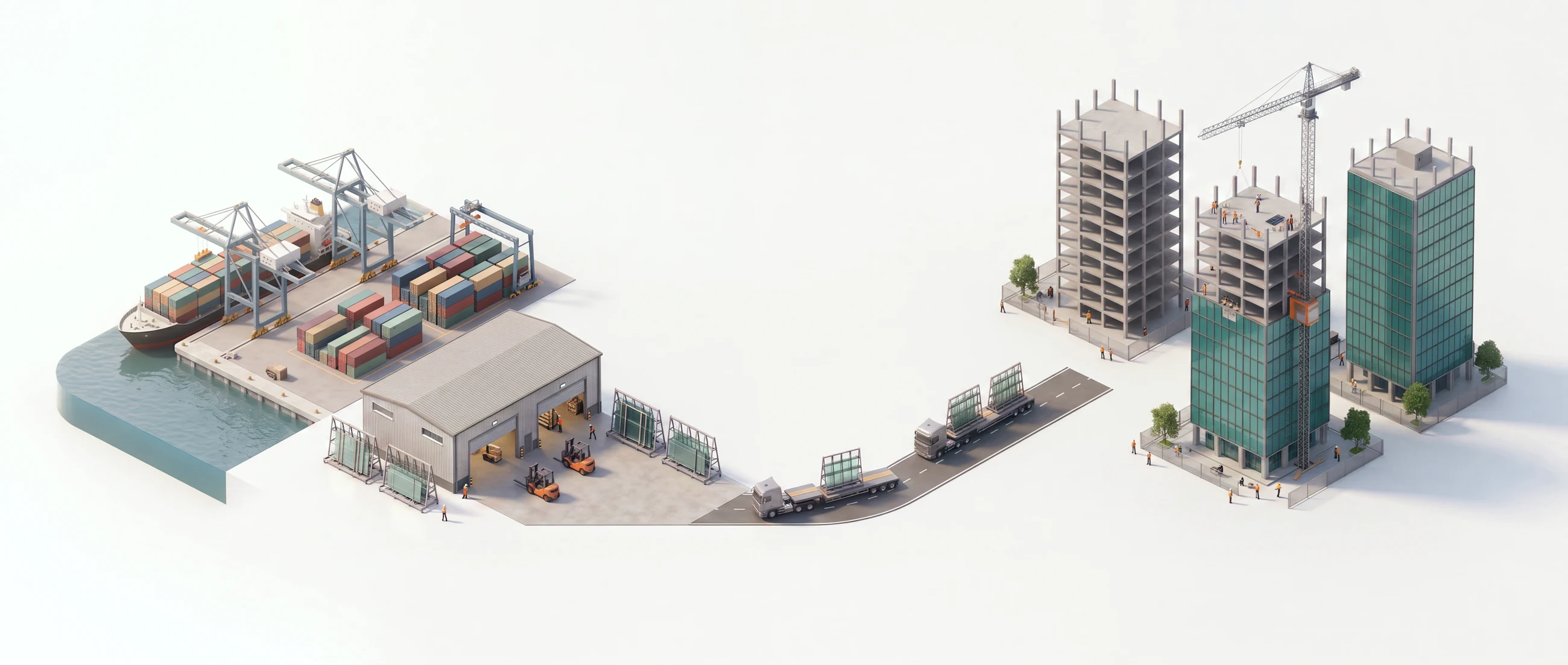
The packing list becomes the job.
Drop in the shipment's packing list and Field Connect reads it out: every container, every stillage, its item ID, level, building number, size and weight. On the first shipment it asks you to confirm the columns once, and after that every shipment on that project imports the same way.
Checked, photographed, and on the clock.
Record the unpack date, attach the arrival photos, and mark whether the container came in damaged or the goods came out clean. Storage starts accruing from that date, the free days first, then a weekly rate per stillage off the project's rate card.
Pick the stillages. The delivery prices itself.
Filter the master sheet by level, container, shipment or PO, tick what is going out, and confirm. Field Connect takes the next DEL number, counts singles and doubles into billable units, and applies the delivery rate and fuel surcharge before you have closed the tab.
The waiting time nobody invoices.
Attach the POD and enter the times the truck arrived and left. Demurrage is worked out against the allowance on the rate card, rounded to your billing increment, floored at your minimum charge, and sits as its own line beneath the delivery.
The variation report is already written.
Every unpack, storage week, delivery, waiting charge and cancelled load sits on the project's variation report under its commodity, with cost beside sell on each line. Change a rate and the system-priced lines follow it. Export to Excel or PDF the day you need it, not the week after.
And the ones that come back.
A stillage returned from site, damaged or headed to recycling, comes back on hand against a BL number, back onto the storage clock from the day it lands, carrying the backload rate. It is the movement most likely to be forgotten, and it is the same few clicks as any other.
Built by people who have stood in the warehouse.
Facade and joinery material does not move in panels. It moves in containers, in stillages, to levels, and every one of those movements has a rate sitting behind it. Field Connect is built around that, not a generic inventory model with a construction skin on it.
The stillage is the unit
Every stillage carries its item ID, the container and shipment it arrived in, its level and building number, whether it is a single or a double, its weight and its size. In, out and back again, each movement logged with a date and a reason, so the on-hand number is one you can defend.
Documents to upload: the packing list on the way in, the POD on the way out. Everything else is a tick and a date.
Your rate card applied as each movement is recorded, cost beside sell. Change a rate later and the system-priced lines follow it.
Damage attached to the thing that was damaged
Raise a record against a container or a stillage: photos, the yard, the date it was found and the reason for the change. Every update is kept as a new version, so the history sits on the record instead of scrolling away in a group chat.
Month end should not be a memory exercise.
The charges that go missing are the small ones that happen constantly: a storage week past the free days, forty-five minutes of a truck waiting on site, a load cancelled the night before, a stillage that came back. Field Connect prices each one the moment it is recorded, against the allowances, increments, minimums and surcharges already sitting on the project's rate card. On a hundred-container package that is the difference between an invoice and an estimate.
The answer is already on the screen.
Builder
How many of the hundred containers have landed, what has gone to site, and what is still sitting in the warehouse.
Facade contractor
Which levels have their material, what arrived damaged, and what is quietly accruing storage.
Installer
What went out on which delivery, when it landed, and the POD attached to prove it.
3PL project manager
Stops rebuilding the invoice. Two documents go in and the variation report is already written.
Bring us a project
that is about to start.
Thirty minutes. We ask about the trade lane, the warehouse, the rate card and how the variation report gets built today, and tell you straight whether Field Connect helps on this package or the one after it.